
Navigation
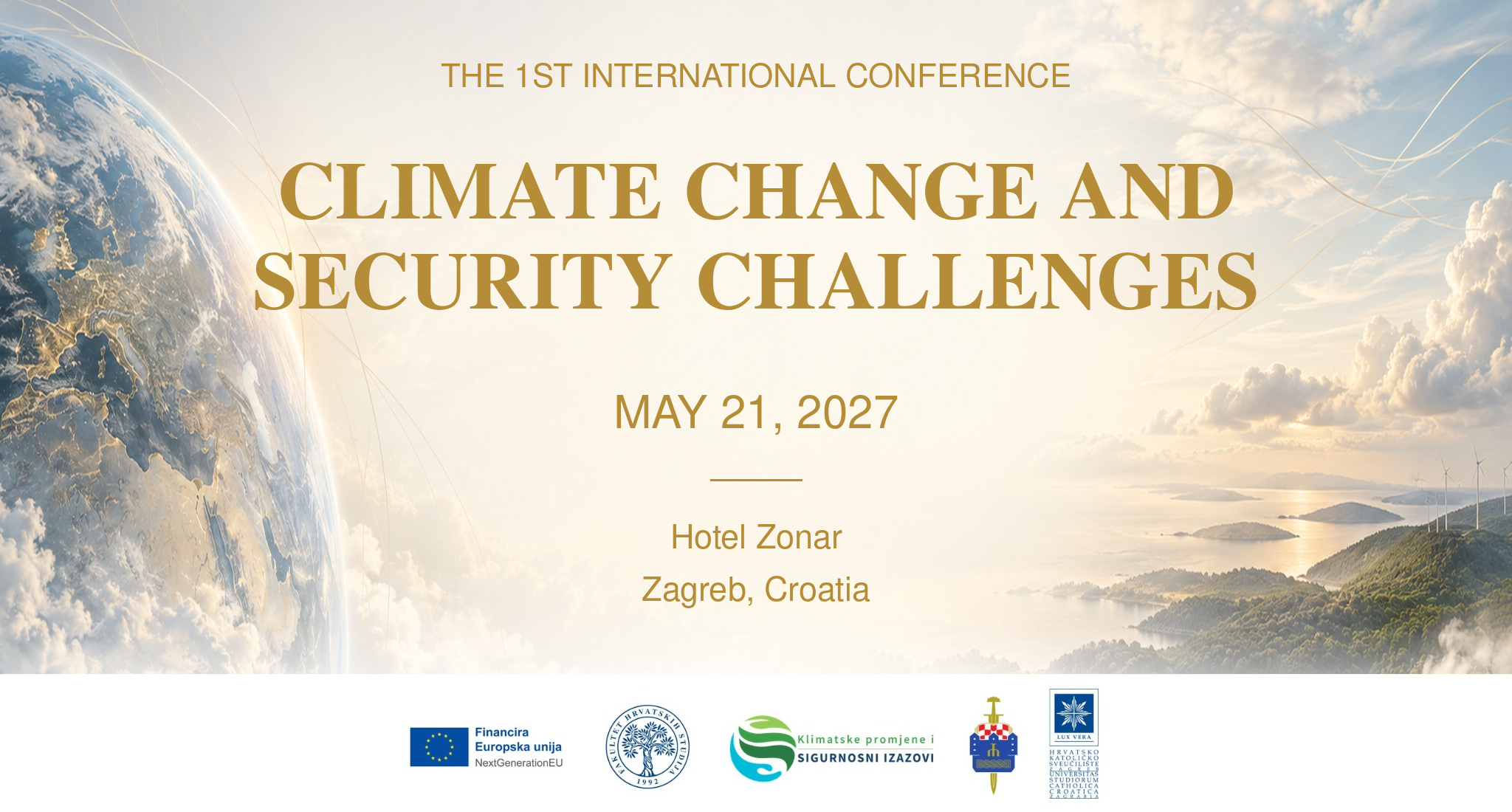
The 1st International Conference on Climate Change and Security Challenges
Introduction
Climate change is no longer solely an environmental concern; it has become a defining societal, geopolitical, economic, and security challenge of our time. Its consequences extend beyond environmental degradation, affecting political stability, economic development, human security, social cohesion, migration, critical infrastructure, and the resilience of communities and institutions. As climate-related risks become increasingly complex and interconnected, understanding their implications for contemporary security and governance has become an essential priority for policymakers, researchers, and practitioners worldwide.
The international conference “Climate Change and Security Challenges” provides an interdisciplinary platform for scholars, researchers, policymakers, and practitioners to examine the complex relationships between climate change, societal resilience, geopolitical dynamics, governance, and contemporary security challenges. The conference aims to foster academic dialogue, encourage the exchange of research findings and professional experience, and promote innovative approaches to understanding and addressing the multifaceted consequences of climate change.
Particular attention will be devoted to the European Union, climate-related security risks, energy transition, climate diplomacy, public perception, information integrity, education, sustainability, and governance responses. The conference will also explore how climate change interacts with existing social inequalities, migration patterns, resource pressures, and political and institutional vulnerabilities, as well as how these challenges can be addressed through effective policies, coordinated action, and international cooperation.
Recognising that climate security cannot be addressed through a single discipline or policy framework, the conference encourages contributions from the social sciences, political science, international relations, security studies, environmental studies, communication, education, economics, law, and related fields. Both theoretical and empirical research, case studies, policy analyses, and practice-oriented contributions are welcome.
By bringing together diverse perspectives and expertise, the conference seeks to strengthen the connection between academic research and practical policymaking, encourage interdisciplinary collaboration, and contribute to the development of resilient, inclusive, and sustainable responses to current and emerging climate-related challenges.
Conference Chairs
- Andreja Sršen, Associate Professor, Project Leader of “Climate Change and Security Challenges”
- Ivan Burazin, Assistant Professor, Head of the Department of Naval Studies, Dr. Franjo Tuđman Defense and Security University
Conference Thematic Sections
- Climate Change, Society, and Global Risks
- Risk society, resilience, inequality, migration, and environmental change.
- Climate Security and Geopolitics in the European Union
- Energy transition, climate diplomacy, and strategic and security challenges.
- Climate Risk Communication and Public Perception
- Media, disinformation, crisis communication, and information integrity.
- Education, Sustainability, and Climate Resilience
- Interdisciplinary learning, sustainable development, public policy, and governance.
- Governance and Security Responses to Climate Change
- Crisis management, conflicts, local and regional stakeholders, and environmental governance.
Conference Topics
Conference Thematic Sections
- Climate Change, Society, and Global Risks (risk society, resilience, inequality, migration, environmental change)
- Climate Security and Geopolitics in the European Union (energy transition, climate diplomacy, strategic and security challenges)
- Climate Risk Communication and Public Perception (media, disinformation, crisis communication, information integrity)
- Education, Sustainability, and Climate Resilience (interdisciplinary learning, sustainable development, public policy and governance)
- Governance and Security Responses to Climate Change (crisis management, conflicts, local and regional stakeholders, environmental governance)
Registration & Fees
| Abstract Submission Deadline | 7 February 2027 |
| Notification of Abstract Acceptance | 21 February 2027 |
| Confirmation of Participation | 1 March 2027 |
| Early-Bird Registration | 22 February – 15 March 2027 |
| Regular Registration | 16 March – 9 April 2027 |
| Category | Early-Bird Registration | Regular Registration | Supporting Documentation |
| Academic Participants | 350.00 EUR | 370.00 EUR | |
| Organizing Committee Members | Free | Free | |
| Students | 80.00 EUR | 100.00 EUR | Student ID |
| Non-Academic Participants | 250.00 EUR | 290.00 EUR | |
| Accompanying Person | 200.00 EUR | 220.00 EUR |
Important Dates
| Date | Activity |
|---|---|
| 23. 10. 2026. | Call for Papers |
| 7. 2. 2027. | Abstract submission deadline |
| 21. 2. 2027. | Notification of acceptance |
| 1. 3. 2027. | Confirmation of participation |
| 22. 3. 2027. | Preliminary programme |
| 15. 4. 2027. | Final programme |
| 21. 5. 2027. | CONFERENCE |
| 15. 6. 2027. | Full paper submission deadline |
| 15. 7. 2027. | Reviews returned to authors |
| 31. 8. 2027. | Revised/final paper submission |
| September–October 2027. | Editing, proofreading, typesetting |
| Autumn 2027. | Conference Proceedings |
Author’s Instructions
Authors must refer to, and abide by, the following instructions in submitting their abstracts/ papers:
Step 1: Abstract Submission Process
- The author should prepare and submit an Abstract of at least 150 – 300 words through the website.
- The abstract should be concise and clearly state the proposed research study’s purpose, results, and conclusions.
- The author should select the most relevant topic for the paper from the corresponding conference topics.
- The author can use/download an Abstract Writing Template prior to submission
- To submit your abstract, you first need to (1) click on the “Register” button on the conference page, (2) click on “Submit Now” and:
- Select the Topic in which you are making the submission
- Insert the title of your study in the “Paper Title” section
- Insert the full abstract in the “Abstract” section/upload a file in the .pdf, .doc, .docm, or .docx format
- Add in writing 3 – 5 keywords that define the field, subfield, topic, and research area covered by the article to help other researchers understand and find your work.
- Provide the names, affiliations, and E-mails of all authors/ co-authors involved
- Confirm your submission by ticking that you have read the instructions and “submit Abstract”
Step 2.1: Abstract Acceptance
- After acceptance of your abstract of at least (150 – 300 words), you will receive a proforma invoice and specific instructions to complete the payment online or by bank transfer (See Conference Fees) to confirm your participation,
- Once your abstract has been accepted, please refer to the important dates tab and carefully review the announced dates to avoid late payment, as late payment comes at an extra charge (early bird/regular/late).
Upon successful payment, the following documents will be issued upon request:
- A signed and stamped abstract acceptance letter
- A payment receipt or invoice
- A visa invitation letter, if required
Please note that the deadlines for registration and participation confirmation, abstract submission, and full paper submission differ. To stay informed and avoid additional fees or delays in the processing of your paper, please carefully review the Important Dates section.
Step 2.2: Full Paper Submission
- Your full paper should be 6+ pages long and submitted before the paper submission deadline, in English, and fit within one of the conference topics.
- Full papers should be a minimum of 6 pages and contain 4,000 words, excluding the abstract and references.
Authors should support their research and clarify their ideas using various explanatory methods, such as figures, equations, and diagrams. - The paper should follow the research paper structure as follows: Abstract (+keywords), Introduction, problem statement, and study aim, Review of the Literature, Methodology, results and conclusion/ discussion, References list using the Paper Writing Template.
- The submission should be made following the same procedure followed for the abstract or sent to the conference email.
- Here: Authors may need more pages than the allotted maximum of 6 to insert figures, tables, appendixes, etc. In this case, they can submit regular papers (max. 12 pages) with the same fixed fee.
Meet Our Chairs
Associate Professor Andreja Sršen
is a university lecturer and researcher at the Department of Sociology, Faculty of Croatian Studies, University of Zagreb, where she teaches the following courses: Geopolitics, Global Security and Climate Change; EU Sustainable Development Policies; EU Institutions; Sociology of Croatian Society; European Union and Civil Society; and International Relations.
She collaborates with the European Parliament Office in Croatia in teaching activities and is a collaborator on the course Integral Ecology at the Catholic University of Croatia. She is the head of the joint lifelong learning program “Climate Change and Security Challenges”, implemented in cooperation with the University of Defense and Security “Dr. Franjo Tuđman”.
She pursued advanced academic training in Rome and completed the Joint Diploma in Integral Ecology at the Pontifical Gregorian University.
She is currently the principal investigator of the institutional research project “Climate Change and Security Challenges”, funded through the National Recovery and Resilience Plan (NRRP) and financed by the European Union – NextGenerationEU.
The project is currently being implemented in cooperation with the University of Defense and Security “Dr. Franjo Tuđman” and the Catholic University of Croatia.
Prof. Branko Grisogono
http://www.gfz.hr/osobne_stranice/grisogono/branko_CV.htm
Doc. dr. sc. Ivan Burazin
Dr. Ivan Burazin is an Assistant Professor at the University of Defense and Security “Dr. Franjo Tuđman”.
From 2018 to 2022, he worked as a Political Analyst for the Organization for Security and Co-operation in Europe (OSCE) Special Monitoring Mission to Ukraine, stationed in the rebel-controlled area of the Luhansk region.
He analyzed political, military, economic, and social trends at local, national, and systemic levels and prepared analytical reports.
As a participant in several research and observation missions, he visited Northern Iraq (Kurdistan), Lebanon, and the island of Lesvos. As a guest lecturer, he taught International Relations and International Business at Libertas International University.)
Organizing (Program) and Scientific Committee of the Conference
MEMBERS OF THE ORGANIZING COMMITTEE
- Full Prof. Luka Mihanović, PhD (president), Dr. Franjo Tuđman Defense and Security University
- Prof. Ivan Burazin, PhD, Dr. Franjo Tuđman Defense and Security University
- Prof. Jurica Botić, PhD, Dr. Franjo Tuđman Defense and Security University
- Prof. Mario Pecimotika, PhD, Dr. Franjo Tuđman Defense and Security University
- Prof. Dražen Barbarić, PhD, University of Mostar, Faculty of Humanities and Social Sciences, Bosnia and Herzegovina
- Prof. Vlatko Smiljanić, PhD, Faculty of Croatian Studies, University of Zagreb, Croatia
- Prof. Željka Metesi Deronjić, PhD, Faculty of Croatian Studies, University of Zagreb, Croatia
- Prof. Zoran Turza, PhD, Catholic University of Croatia
- Prof. Ivan Pepić, PhD, Dr. Franjo Tuđman Defense and Security University
- Prof. Goran Radoš, PhD, Faculty of Croatian Studies, University of Zagreb, Croatia
- Adjunct Assoc. Prof. Katarina Bačić, PhD, Dr. Franjo Tuđman Defense and Security University
- Katarina Balić, M.Eng., Franjo Tuđman Defense and Security University
- Marija Novak, M.Eng., Franjo Tuđman Defense and Security University
- Renata Rubčić, M.Eng., Dr. Franjo Tuđman Defense and Security University
- Oleksandr Mynko, PhD, Kyiv Institute of the National Guard of Ukraine, Faculty of State Security Provision, Ukraine
- Maja Vejić, M.Phil, Dr. Franjo Tuđman Defense and Security University
MEMBERS OF THE PROGRAMME COMMITTEE
- Assoc. Prof. Andreja Sršen, PhD (Chair)
Faculty of Croatian Studies, University of Zagreb, Croatia
- Assoc. Prof. Rona Bušljeta Kardum, PhD
Faculty of Croatian Studies, University of Zagreb, Croatia
- Assist. Prof. Vanesa Varga, PhD
Faculty of Croatian Studies, University of Zagreb, Croatia
- Ivan Nađ, PhD
Faculty of Croatian Studies, University of Zagreb, Croatia
- Žanina Žigo, PhD
Catholic University of Croatia, Croatia
- Prof. Giray Sadık, PhD
Ankara Yıldırım Beyazıt University, Türkiye
Director, European Studies Research Center
- Assist. Prof. Damir Bevanda
Faculty of Humanities and Social Sciences, University of Mostar, Bosnia and Herzegovina
- Assoc. Prof. Michal Biernacki, PhD
Wroclaw University of Economics and Business, Poland
Department of Financial Accounting, Taxes and Audit
- Assist. Prof. Tonći Prodan, PhD
Dr. Franjo Tuđman Defense and Security University
- Assist. Prof. Ivica Kinder, PhD
Dr. Franjo Tuđman Defense and Security University
- Assist. Prof. Dražen Smiljanić, PhD
Dr. Franjo Tuđman Defense and Security University
- Full Prof., Lucija Šerić Jelaska, PhD
Dr. Franjo Tuđman Defense and Security University
- Full Prof., Marica Mamut, PhD
Dr. Franjo Tuđman Defense and Security University
- Assoc. Prof. Jadranka Šepić, PhD
Faculty of Science, University of Split, Croatia
- Colonel Prof. Milen Atanasov Atanasov, PhD, Eng. (Dean)
“Georgi Benkovski” Bulgarian Air Force Academy, Bulgaria
- Colonel Assoc. Prof. Martin Milenov Kambushev, PhD, Eng.
“Georgi Benkovski” Bulgarian Air Force Academy, Bulgaria
- Assist. Prof. Jurica Botić, PhD
Dr. Franjo Tuđman Defense and Security University
- Assoc. Prof. Jure Konjevod, PhD
Dr. Franjo Tuđman Defense and Security University
Participant’s Instructions
Registration
To help the organizers plan for inter-disciplinary dialogue, participants are requested to choose from the Conference themes/Topics upon registration.
They must also refer to, and abide by, the following instructions in registering and/ or submitting their contributions:
NOTE: If you are contributing as an Author of a submitted abstract (for publishing consideration and/or presentation), and regardless of attendance, the fee for the registration is the same. See and Conference Fees for more information.
Types of Participation
1. Attend/ Present in-person and Publish in Conference proceedings
See Author Instructions and Conference Fees for more information.
2. Non-presenting participant
Non-presenting participants may also wish to attend the conference as Audience Members or Co-authors contributing to an already submitted abstract/ paper.
Flyer & Poster
Partners
The project is implemented in cooperation with the University of Dr. Franjo Tuđman Defense and Security University


Keynote Speakers
Dr Tim Clack
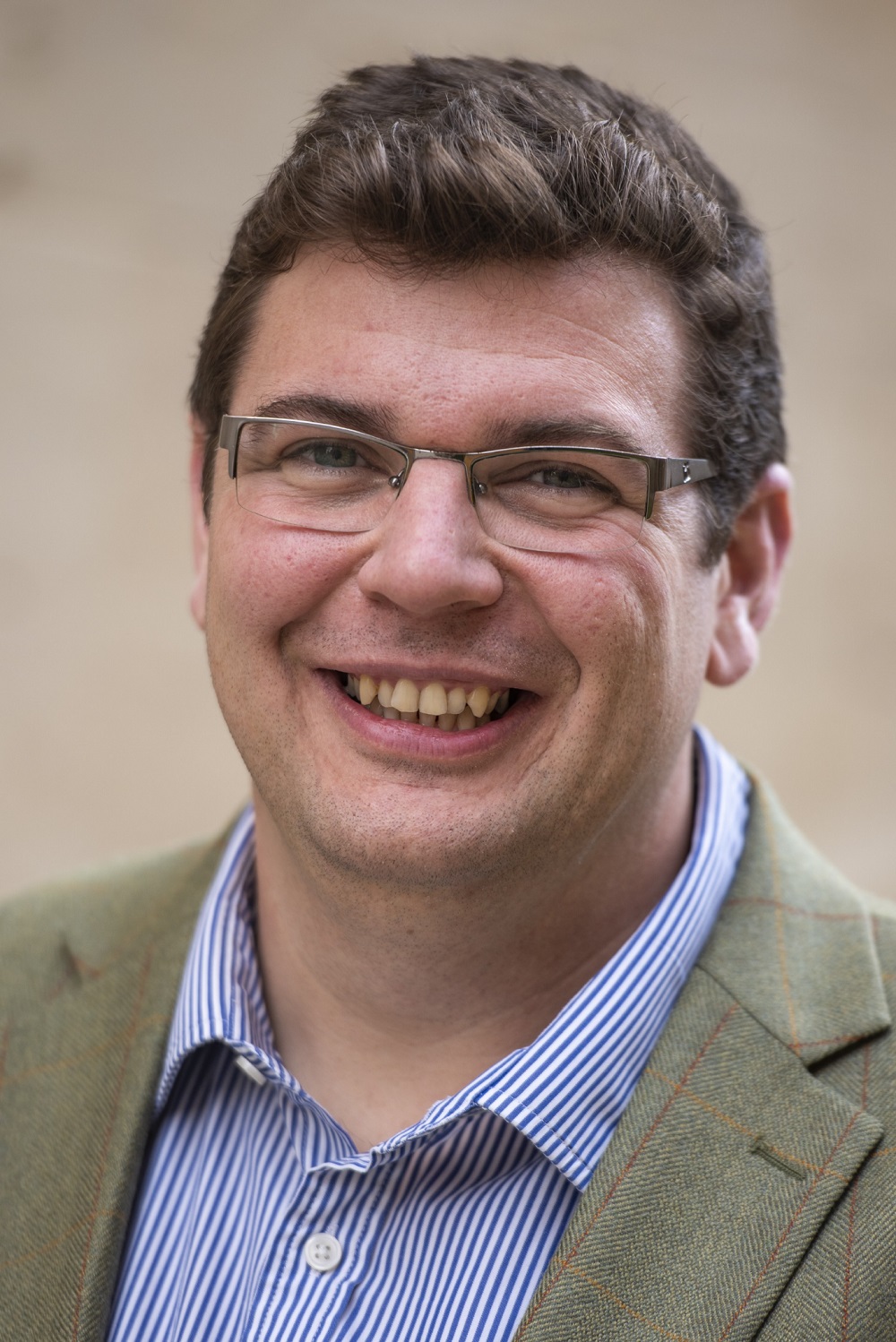
Dr Tim Clack is Associate Professor at the School of Anthropology and Director of the Climate Change & (In)Security Programme at the University of Oxford. He is also Adjust Associate Professor of Climate Security and Resilience at the United Nations University. Tim’s research interests centre on the drivers and aftermaths of conflict, in particular climate and environmental change, geopolitics and influence, and identities and propaganda. Recent projects have focused on the UK, Middle East, sub-Saharan Africa, Central Asia, and the South Atlantic.
Luka Mihanović
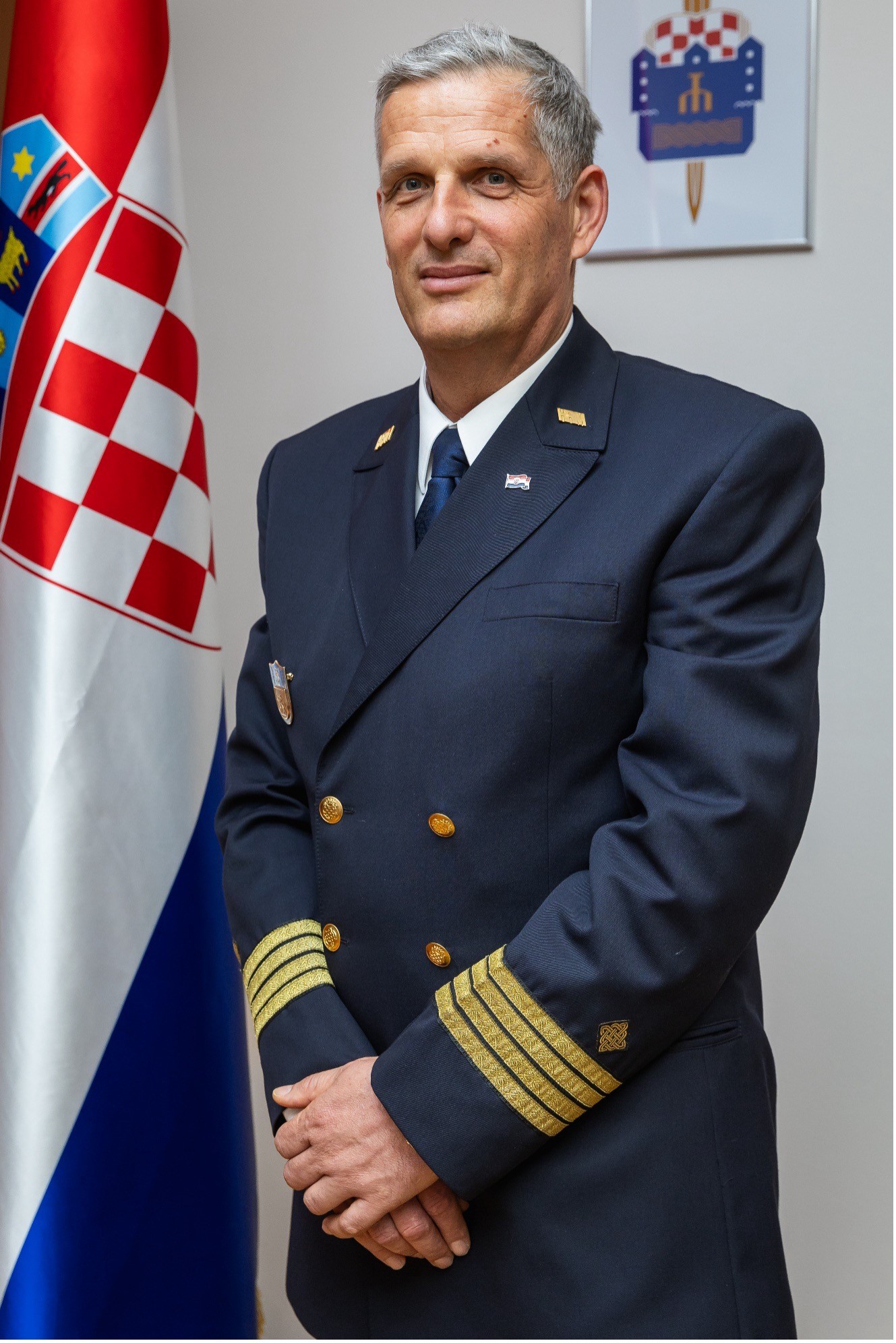
Luka Mihanović, PhD, is a Full Professor, Navy Captain, and Vice-Rector for Education, Student Affairs and Quality Assurance at the Dr Franjo Tuđman Defense and Security University. He has contributed to the development and accreditation of study programmes for the Croatian Armed Forces and is actively involved in teaching across these programmes. He also contributed to the establishment of the Naval Studies programme, which he previously headed. He is an external associate at the Faculty of Maritime Studies at the University of Split and the University of Rijeka. His research and professional interests centre on naval operations, ship propulsion systems, and ship maintenance. His project activities encompass security, defence systems, and advanced maritime technologies, including the CUV-ME project, conducted in cooperation with the Croatian Ministry of Defence and the U.S. Department of Defense.
Conference Venue
International Scientific Conference
„Climate Change and Security Challenges“
Introduction
Climate change is no longer solely an environmental concern; it has become a defining societal, geopolitical, economic, and security challenge of our time. Its consequences extend beyond environmental degradation, affecting political stability, economic development, human security, social cohesion, migration, critical infrastructure, and the resilience of communities and institutions. As climate-related risks become increasingly complex and interconnected, understanding their implications for contemporary security and governance has become an essential priority for policymakers, researchers, and practitioners worldwide.
The international conference “Climate Change and Security Challenges” provides an interdisciplinary platform for scholars, researchers, policymakers, and practitioners to examine the complex relationships between climate change, societal resilience, geopolitical dynamics, governance, and contemporary security challenges. The conference aims to foster academic dialogue, encourage the exchange of research findings and professional experience, and promote innovative approaches to understanding and addressing the multifaceted consequences of climate change.
Particular attention will be devoted to the European Union, climate-related security risks, energy transition, climate diplomacy, public perception, information integrity, education, sustainability, and governance responses. The conference will also explore how climate change interacts with existing social inequalities, migration patterns, resource pressures, and political and institutional vulnerabilities, as well as how these challenges can be addressed through effective policies, coordinated action, and international cooperation.
Recognising that climate security cannot be addressed through a single discipline or policy framework, the conference encourages contributions from the social sciences, political science, international relations, security studies, environmental studies, communication, education, economics, law, and related fields. Both theoretical and empirical research, case studies, policy analyses, and practice-oriented contributions are welcome.
By bringing together diverse perspectives and expertise, the conference seeks to strengthen the connection between academic research and practical policymaking, encourage interdisciplinary collaboration, and contribute to the development of resilient, inclusive, and sustainable responses to current and emerging climate-related challenges.
Conference Chairs
- Andreja Sršen, Associate Professor, Project Leader of “Climate Change and Security Challenges”
- Ivan Burazin, Assistant Professor, Head of the Department of Naval Studies, Dr. Franjo Tuđman Defense and Security University
Conference Thematic Sections
- Climate Change, Society, and Global Risks
- Risk society, resilience, inequality, migration, and environmental change.
- Climate Security and Geopolitics in the European Union
- Energy transition, climate diplomacy, and strategic and security challenges.
- Climate Risk Communication and Public Perception
- Media, disinformation, crisis communication, and information integrity.
- Education, Sustainability, and Climate Resilience
- Interdisciplinary learning, sustainable development, public policy, and governance.
- Governance and Security Responses to Climate Change
- Crisis management, conflicts, local and regional stakeholders, and environmental governance.
Conference Topics
Conference Thematic Sections
- Climate Change, Society, and Global Risks (risk society, resilience, inequality, migration, environmental change)
- Climate Security and Geopolitics in the European Union (energy transition, climate diplomacy, strategic and security challenges)
- Climate Risk Communication and Public Perception (media, disinformation, crisis communication, information integrity)
- Education, Sustainability, and Climate Resilience (interdisciplinary learning, sustainable development, public policy and governance)
- Governance and Security Responses to Climate Change (crisis management, conflicts, local and regional stakeholders, environmental governance)
Registration & Fees
| Abstract Submission Deadline | 7 February 2027 |
| Notification of Abstract Acceptance | 21 February 2027 |
| Confirmation of Participation | 1 March 2027 |
| Early-Bird Registration | 22 February – 15 March 2027 |
| Regular Registration | 16 March – 9 April 2027 |
| Category | Early-Bird Registration | Regular Registration | Supporting Documentation |
|---|---|---|---|
| Academic Participants | 350.00 EUR | 370.00 EUR | |
| Organizing Committee Members | Free | Free | |
| Students | 80.00 EUR | 100.00 EUR | Student ID |
| Non-Academic Participants | 250.00 EUR | 290.00 EUR | |
| Accompanying Person | 200.00 EUR | 220.00 EUR |
Important Dates
| Date | Activity |
|---|---|
| 23. 10. 2026. | Call for Papers |
| 7. 2. 2027. | Abstract submission deadline |
| 21. 2. 2027. | Notification of acceptance |
| 1. 3. 2027. | Confirmation of participation |
| 22. 3. 2027. | Preliminary programme |
| 15. 4. 2027. | Final programme |
| 21. 5. 2027. | CONFERENCE |
| 15. 6. 2027. | Full paper submission deadline |
| 15. 7. 2027. | Reviews returned to authors |
| 31. 8. 2027. | Revised/final paper submission |
| September–October 2027. | Editing, proofreading, typesetting |
| Autumn 2027. | Conference Proceedings |
Author’s Instructions
Authors must refer to, and abide by, the following instructions in submitting their abstracts/ papers:
Step 1: Abstract Submission Process
- The author should prepare and submit an Abstract of at least 150 – 300 words through the website.
- The abstract should be concise and clearly state the proposed research study’s purpose, results, and conclusions.
- The author should select the most relevant topic for the paper from the corresponding conference topics.
- The author can use/download an Abstract Writing Template prior to submission
- To submit your abstract, you first need to (1) click on the “Register” button on the conference page, (2) click on “Submit Now” and:
- Select the Topic in which you are making the submission
- Insert the title of your study in the “Paper Title” section
- Insert the full abstract in the “Abstract” section/upload a file in the .pdf, .doc, .docm, or .docx format
- Add in writing 3 – 5 keywords that define the field, subfield, topic, and research area covered by the article to help other researchers understand and find your work.
- Provide the names, affiliations, and E-mails of all authors/ co-authors involved
- Confirm your submission by ticking that you have read the instructions and “submit Abstract”
Step 2.1: Abstract Acceptance
- After acceptance of your abstract of at least (150 – 300 words), you will receive a proforma invoice and specific instructions to complete the payment online or by bank transfer (See Conference Fees) to confirm your participation,
- Once your abstract has been accepted, please refer to the important dates tab and carefully review the announced dates to avoid late payment, as late payment comes at an extra charge (early bird/regular/late).
Upon successful payment, the following documents will be issued upon request:
- A signed and stamped abstract acceptance letter
- A payment receipt or invoice
- A visa invitation letter, if required
Please note that the deadlines for registration and participation confirmation, abstract submission, and full paper submission differ. To stay informed and avoid additional fees or delays in the processing of your paper, please carefully review the Important Dates section.
Step 2.2: Full Paper Submission
- Your full paper should be 6+ pages long and submitted before the paper submission deadline, in English, and fit within one of the conference topics.
- Full papers should be a minimum of 6 pages and contain 4,000 words, excluding the abstract and references.
Authors should support their research and clarify their ideas using various explanatory methods, such as figures, equations, and diagrams. - The paper should follow the research paper structure as follows: Abstract (+keywords), Introduction, problem statement, and study aim, Review of the Literature, Methodology, results and conclusion/ discussion, References list using the Paper Writing Template.
- The submission should be made following the same procedure followed for the abstract or sent to the conference email.
- Here: Authors may need more pages than the allotted maximum of 6 to insert figures, tables, appendixes, etc. In this case, they can submit regular papers (max. 12 pages) with the same fixed fee.
Meet Our Chairs
Associate Professor Andreja Sršen
is a university lecturer and researcher at the Department of Sociology, Faculty of Croatian Studies, University of Zagreb, where she teaches the following courses: Geopolitics, Global Security and Climate Change; EU Sustainable Development Policies; EU Institutions; Sociology of Croatian Society; European Union and Civil Society; and International Relations.
She collaborates with the European Parliament Office in Croatia in teaching activities and is a collaborator on the course Integral Ecology at the Catholic University of Croatia. She is the head of the joint lifelong learning program “Climate Change and Security Challenges”, implemented in cooperation with the University of Defense and Security “Dr. Franjo Tuđman”.
She pursued advanced academic training in Rome and completed the Joint Diploma in Integral Ecology at the Pontifical Gregorian University.
She is currently the principal investigator of the institutional research project “Climate Change and Security Challenges”, funded through the National Recovery and Resilience Plan (NRRP) and financed by the European Union – NextGenerationEU.
The project is currently being implemented in cooperation with the University of Defense and Security “Dr. Franjo Tuđman” and the Catholic University of Croatia.
Prof. Branko Grisogono
Doc. dr. sc. Ivan Burazin
Dr. Ivan Burazin is an Assistant Professor at the University of Defense and Security “Dr. Franjo Tuđman”.
From 2018 to 2022, he worked as a Political Analyst for the Organization for Security and Co-operation in Europe (OSCE) Special Monitoring Mission to Ukraine, stationed in the rebel-controlled area of the Luhansk region.
He analyzed political, military, economic, and social trends at local, national, and systemic levels and prepared analytical reports.
As a participant in several research and observation missions, he visited Northern Iraq (Kurdistan), Lebanon, and the island of Lesvos. As a guest lecturer, he taught International Relations and International Business at Libertas International University.)
Organizing (Program) and Scientific Committee of the Conference
MEMBERS OF THE ORGANIZING COMMITTEE
- Full Prof. Luka Mihanović, PhD (president), Dr. Franjo Tuđman Defense and Security University
- Prof. Ivan Burazin, PhD, Dr. Franjo Tuđman Defense and Security University
- Prof. Jurica Botić, PhD, Dr. Franjo Tuđman Defense and Security University
- Prof. Mario Pecimotika, PhD, Dr. Franjo Tuđman Defense and Security University
- Prof. Dražen Barbarić, PhD, University of Mostar, Faculty of Humanities and Social Sciences, Bosnia and Herzegovina
- Prof. Vlatko Smiljanić, PhD, Faculty of Croatian Studies, University of Zagreb, Croatia
- Prof. Željka Metesi Deronjić, PhD, Faculty of Croatian Studies, University of Zagreb, Croatia
- Prof. Zoran Turza, PhD, Catholic University of Croatia
- Prof. Ivan Pepić, PhD, Dr. Franjo Tuđman Defense and Security University
- Prof. Goran Radoš, PhD, Faculty of Croatian Studies, University of Zagreb, Croatia
- Adjunct Assoc. Prof. Katarina Bačić, PhD, Dr. Franjo Tuđman Defense and Security University
- Katarina Balić, M.Eng., Franjo Tuđman Defense and Security University
- Marija Novak, M.Eng., Franjo Tuđman Defense and Security University
- Renata Rubčić, M.Eng., Dr. Franjo Tuđman Defense and Security University
- Oleksandr Mynko, PhD, Kyiv Institute of the National Guard of Ukraine, Faculty of State Security Provision, Ukraine
- Maja Vejić, M.Phil, Dr. Franjo Tuđman Defense and Security University
MEMBERS OF THE PROGRAMME COMMITTEE
- Assoc. Prof. Andreja Sršen, PhD (Chair)
Faculty of Croatian Studies, University of Zagreb, Croatia
- Assoc. Prof. Rona Bušljeta Kardum, PhD
Faculty of Croatian Studies, University of Zagreb, Croatia
- Assist. Prof. Vanesa Varga, PhD
Faculty of Croatian Studies, University of Zagreb, Croatia
- Ivan Nađ, PhD
Faculty of Croatian Studies, University of Zagreb, Croatia
- Žanina Žigo, PhD
Catholic University of Croatia, Croatia
- Prof. Giray Sadık, PhD
Ankara Yıldırım Beyazıt University, Türkiye
Director, European Studies Research Center
- Assist. Prof. Damir Bevanda
Faculty of Humanities and Social Sciences, University of Mostar, Bosnia and Herzegovina
- Assoc. Prof. Michal Biernacki, PhD
Wroclaw University of Economics and Business, Poland
Department of Financial Accounting, Taxes and Audit
- Assist. Prof. Tonći Prodan, PhD
Dr. Franjo Tuđman Defense and Security University
- Assist. Prof. Ivica Kinder, PhD
Dr. Franjo Tuđman Defense and Security University
- Assist. Prof. Dražen Smiljanić, PhD
Dr. Franjo Tuđman Defense and Security University
- Full Prof., Lucija Šerić Jelaska, PhD
Dr. Franjo Tuđman Defense and Security University
- Full Prof., Marica Mamut, PhD
Dr. Franjo Tuđman Defense and Security University
- Assoc. Prof. Jadranka Šepić, PhD
Faculty of Science, University of Split, Croatia
- Colonel Prof. Milen Atanasov Atanasov, PhD, Eng. (Dean)
“Georgi Benkovski” Bulgarian Air Force Academy, Bulgaria
- Colonel Assoc. Prof. Martin Milenov Kambushev, PhD, Eng.
“Georgi Benkovski” Bulgarian Air Force Academy, Bulgaria
- Assist. Prof. Jurica Botić, PhD
Dr. Franjo Tuđman Defense and Security University
- Assoc. Prof. Jure Konjevod, PhD
Dr. Franjo Tuđman Defense and Security University
Participant’s Instructions
Registration
To help the organizers plan for inter-disciplinary dialogue, participants are requested to choose from the Conference themes/Topics upon registration.
They must also refer to, and abide by, the following instructions in registering and/ or submitting their contributions:
NOTE: If you are contributing as an Author of a submitted abstract (for publishing consideration and/or presentation), and regardless of attendance, the fee for the registration is the same. See and Conference Fees for more information.
Types of Participation
1. Attend/ Present in-person and Publish in Conference proceedings
See Author Instructions and Conference Fees for more information.
2. Non-presenting participant
Non-presenting participants may also wish to attend the conference as Audience Members or Co-authors contributing to an already submitted abstract/ paper.
Flyer & Poster
Partners
The project is implemented in cooperation with the Dr. Franjo Tuđman Defense and Security University
Keynote Speakers
Dr Tim Clack
Dr Tim Clack is Associate Professor at the School of Anthropology and Director of the Climate Change & (In)Security Programme at the University of Oxford. He is also Adjust Associate Professor of Climate Security and Resilience at the United Nations University. Tim’s research interests centre on the drivers and aftermaths of conflict, in particular climate and environmental change, geopolitics and influence, and identities and propaganda. Recent projects have focused on the UK, Middle East, sub-Saharan Africa, Central Asia, and the South Atlantic.
Luka Mihanović
Luka Mihanović, PhD, is a Full Professor, Navy Captain, and Vice-Rector for Education, Student Affairs and Quality Assurance at the Dr Franjo Tuđman Defense and Security University. He has contributed to the development and accreditation of study programmes for the Croatian Armed Forces and is actively involved in teaching across these programmes. He also contributed to the establishment of the Naval Studies programme, which he previously headed. He is an external associate at the Faculty of Maritime Studies at the University of Split and the University of Rijeka. His research and professional interests centre on naval operations, ship propulsion systems, and ship maintenance. His project activities encompass security, defence systems, and advanced maritime technologies, including the CUV-ME project, conducted in cooperation with the Croatian Ministry of Defence and the U.S. Department of Defense.